
Record it. Defend it. Track it down. Do it.
The PROJECT JOURNAL for researchers is part notebook, part logbook, and part research wish list. It’s your research companion that sits open beside you while you read, think, and type.
For supervisors: give this journal to your student, and you will save yourself time by establishing strong research practices from the start. Your meetings will be more succinct and less about organising, more about the research.
For researchers: know what you’ve spent your time on, defend your ideas with ease and never lose a good source on a scrap piece of paper again!
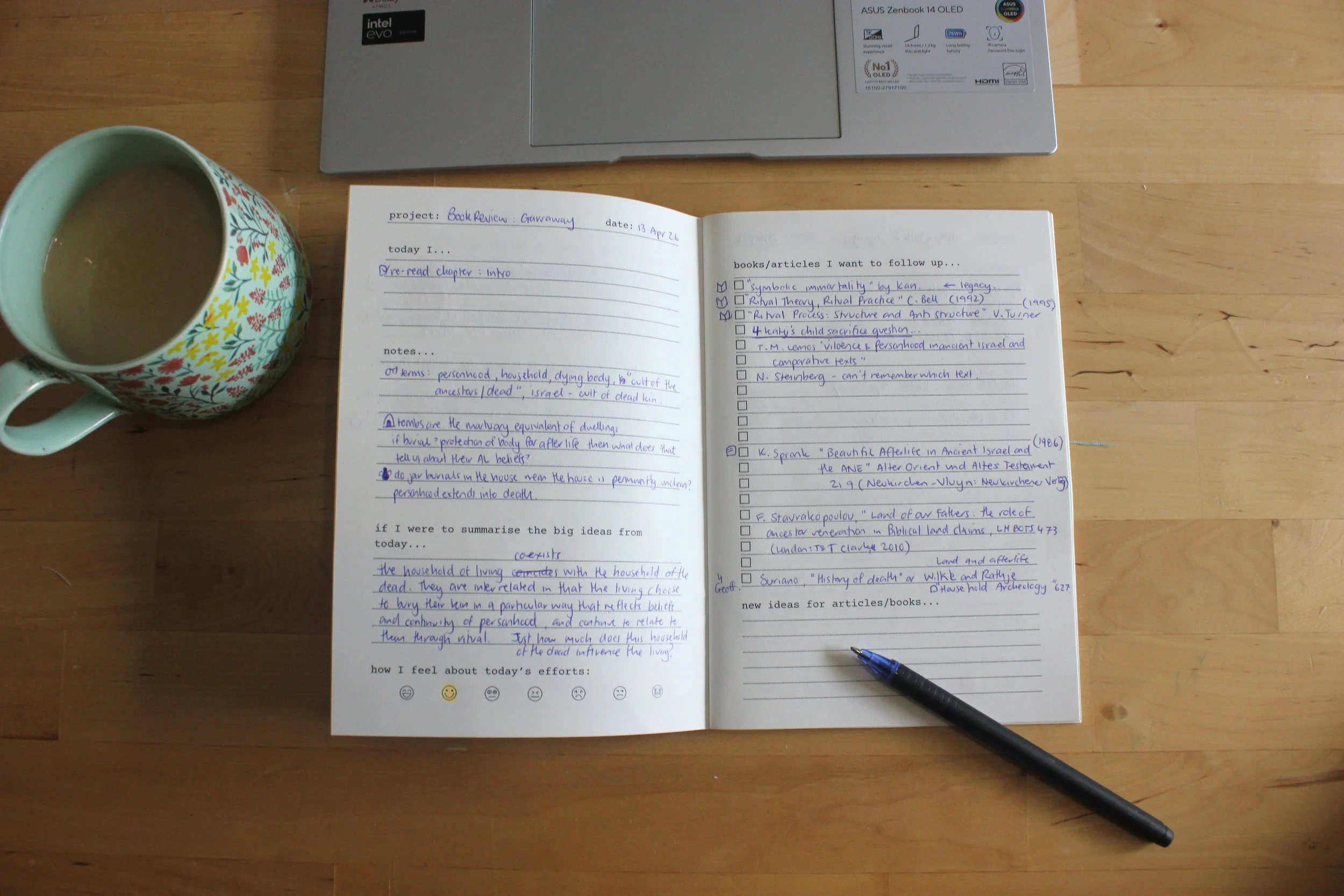
The PROJECT JOURNAL for researchers. Developed by me (and for me)!
It started with the need for a ‘carpark’. A place to list down the resources and leads that I wanted to follow, and a way to track which ones I’d read. A place to put down the new ideas that kept sparking as I read things, because my brain wouldn’t let me move on without a place that it trusted I would revisit.
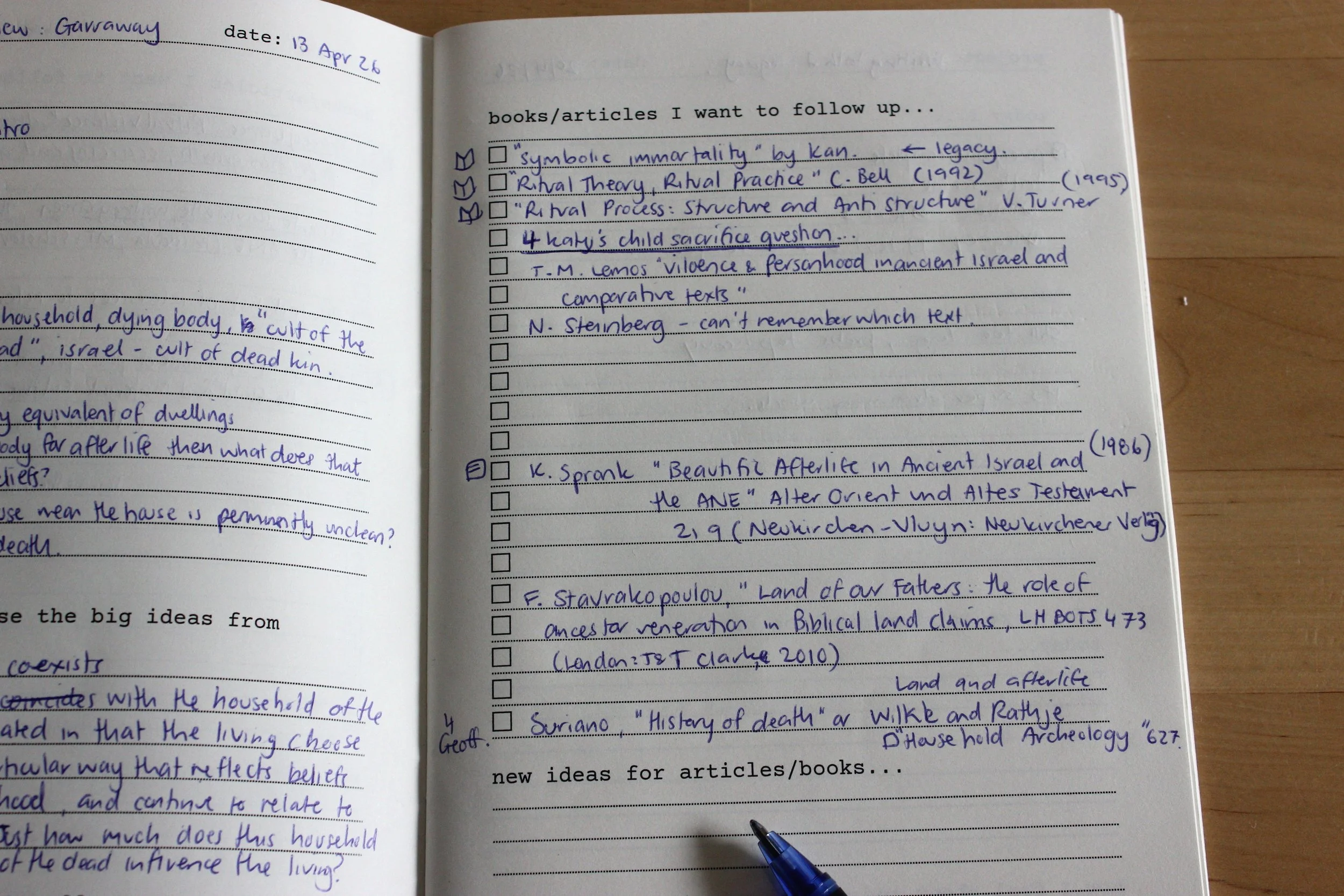
The two-page spread has one side dedicated to recording all the new sources you want to follow up on. Tick them off when you get around to reading them. Never lose a good source to a scrap bit of paper again! And a place to put those new ideas so that you can concentrate on what you are reading. (I also start each new session by quickly flipping back to check if there was a source I wanted to read.)
Then I started thinking about intellectual property and AI. That one day I may need to defend my thinking as my own. I wanted a place to log my research questions and mini-epiphanies.
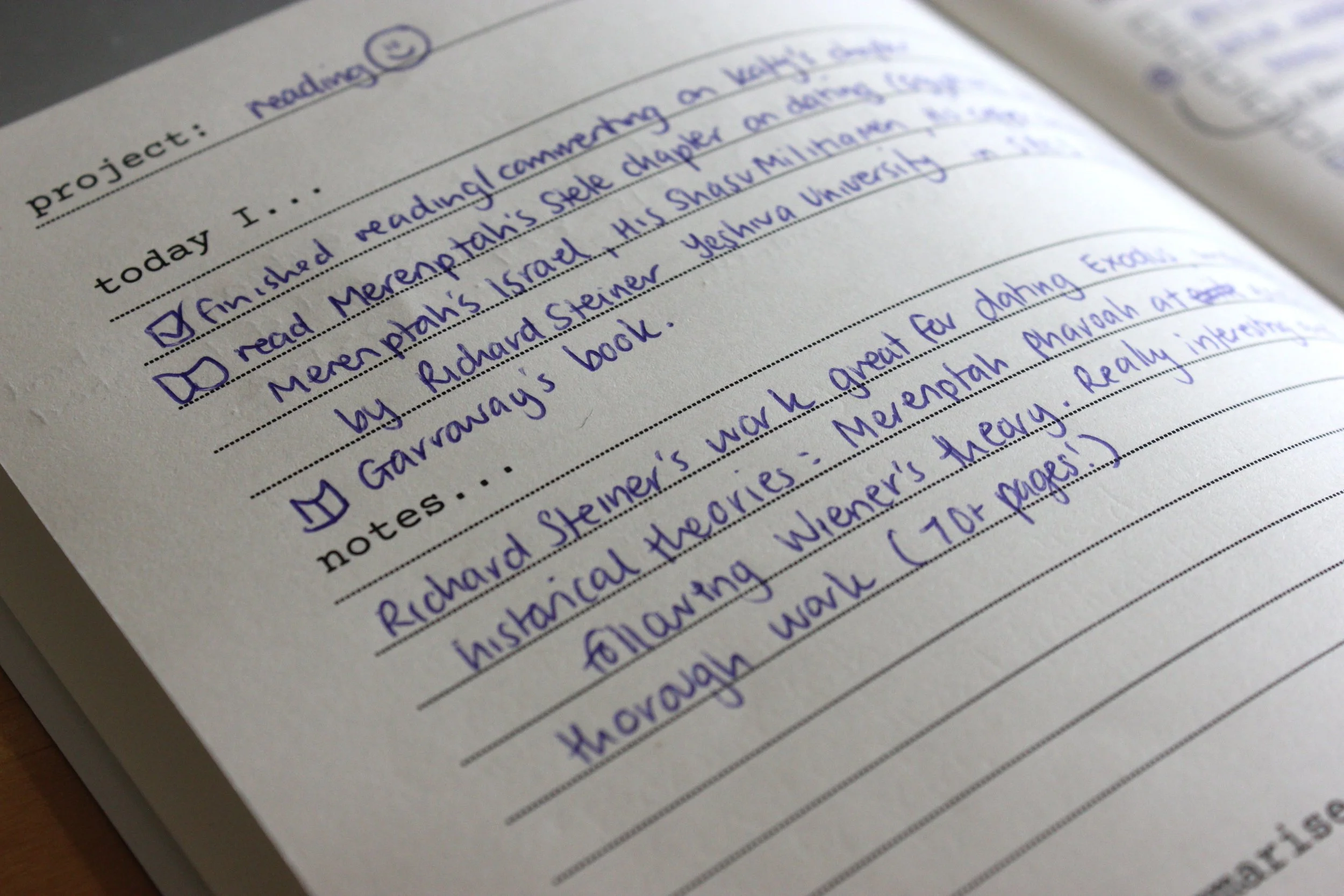
Now, when someone asks, “What did you do today?” I can answer with more than ‘reading’! I know if I had a meeting and any action points to follow through with. (Excellent prompts for responding to supervisors!) I also use notes to record any AI use. I’ve heard that some journals are now asking for all AI input to be quantified up front. Logging a quick prompt in which model, or any research assistance here, will save you heartache later!
I was also reading Katherine Firth’s excellent Writing Well and Being Well for Your PhD and Beyond, and in it, she describes a practice of transitioning well after a writing session by journaling. I’m not typically a journaler, but I do see the value in giving my brain finite (daily) boundaries for the infinite task of research. I reserve the ‘big ideas for today’ prompt for the last 10 minutes of my research session. It helps me spend time on meta-thoughts; patterns emerge, and learning solidifies.
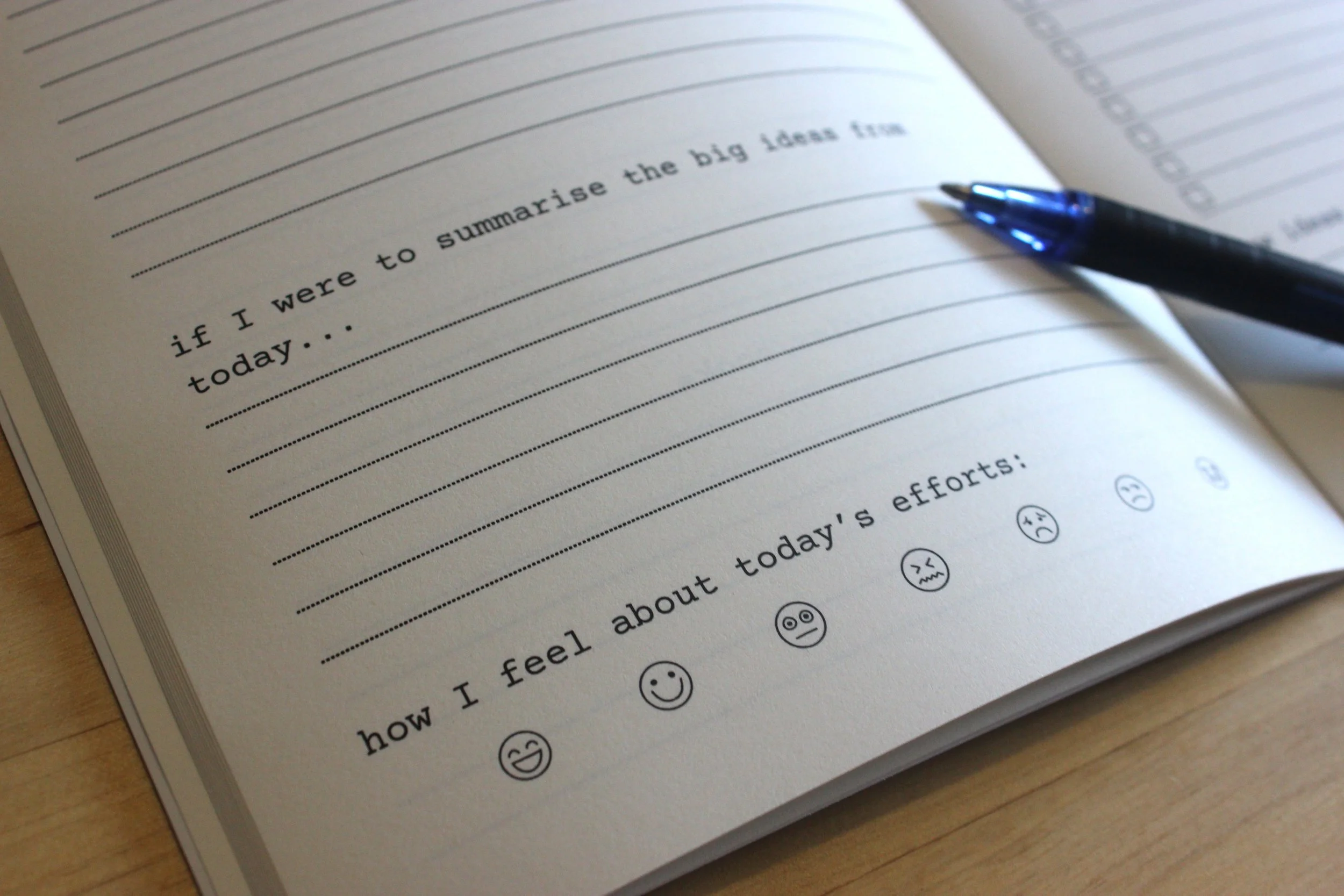
The first page of the two-page spread is about logging actions, thoughts, and feelings. As a routine, this holistic approach to research is all about being quick, accessible, and helping you become a more effective/reflective researcher.
I was also thinking about tracking mental well-being related to research to identify patterns and get help early. So I added the emoticons to remind me to check in with my feelings. Too many crying faces in a row mean it’s time to check in with my supervisor or a colleague. Highlighting the happy face reinforces my love of research with that dopamine hit. It’s very satisfying to get to the end of the day and see how I’ve spent my time in a quantified way.
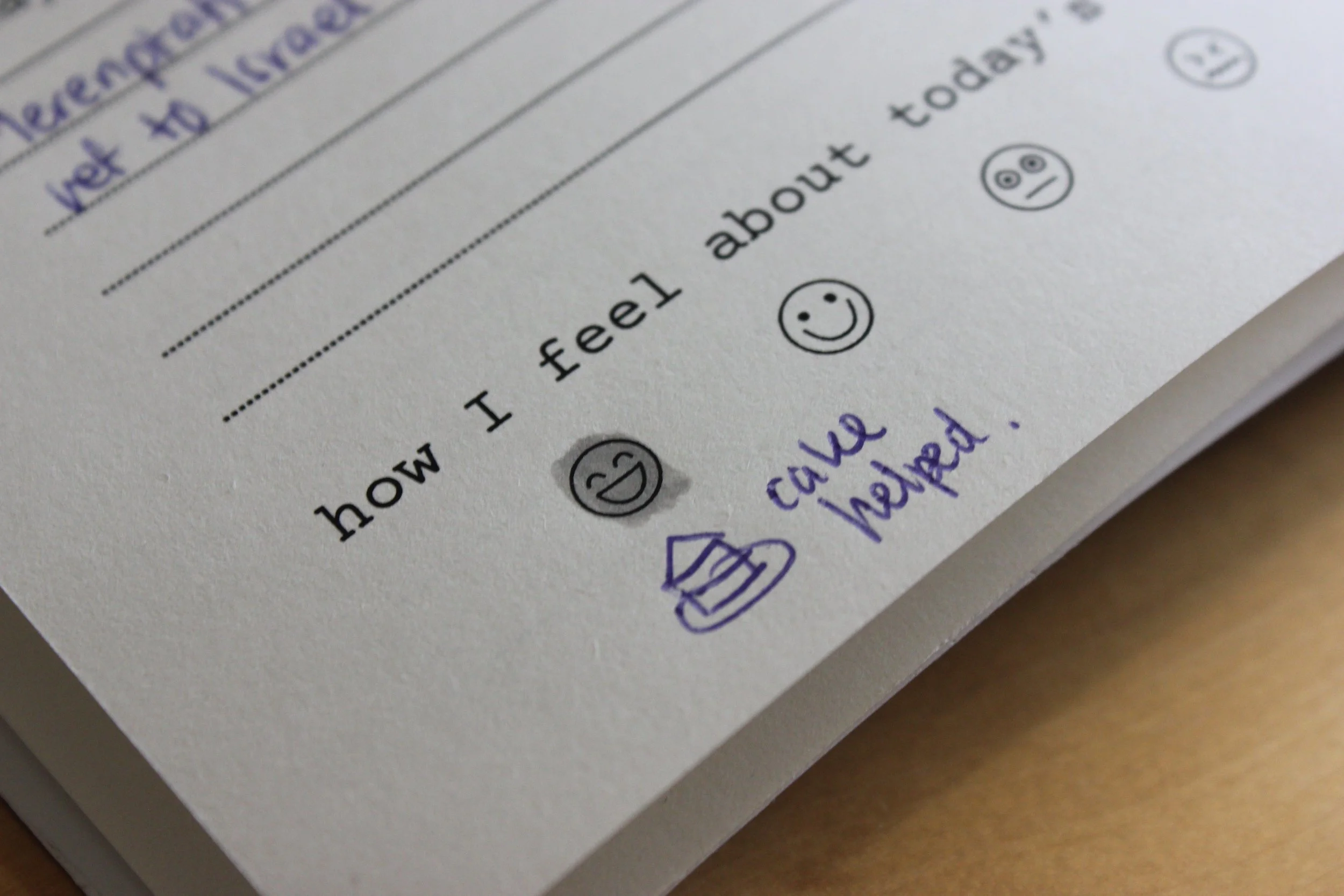
Cake definitely does help. I recommend all research be done with excellent beverages on tap, and if at all possible, cake.
The brilliant thing is that the PROJECT JOURNAL can hold multiple projects! List them on the front page, so when you’re thinking of revisiting a project, or the associated research, you know exactly which volumes to look in. And when you finish a journal, transfer all your ‘new ideas’ to the back page and have a handy list for when you need inspiration!
Happy Researching! ~ Rosey
