
The Storyclock: the 20 min paper tool
You know the conundrum: an 8,000-word paper and only 20 minutes to present. What can academics learn from film production techniques? Answer: managing content to a finite amount of time!
Conference season is on my horizon, and the Storyclock by producer Seth Worley has me nailing the 20-minute talk on the first run through! If running out of time is your chronic conference nemesis, I highly recommend making this tool part of your planning.
You have choices. Do you a) read your paper at a cracking pace, b) give a distilled version of your paper, or c) try to read your whole paper and end up having to cut out the last 8 pages because you ran out of time? NB: I have witnessed option a) and the mental whiplash was not worth it!
When I pitched this complaint to my supervisor for an upcoming conference, he said,
“Say one thing and say it well. The gold is in the questions and feedback.”
So I abandoned trying to finish the minutiae of the article and switched to presenting the main argument. Now I’m a ‘full script’ gal, but the main issue, as everyone knows, is fitting within the allotted time. Whether you’re a full script or a dot point person, I’m convinced that the main issue of why we run out of time is because we plan talks in a linear fashion—straight down the page.
Enter the Storyclock .
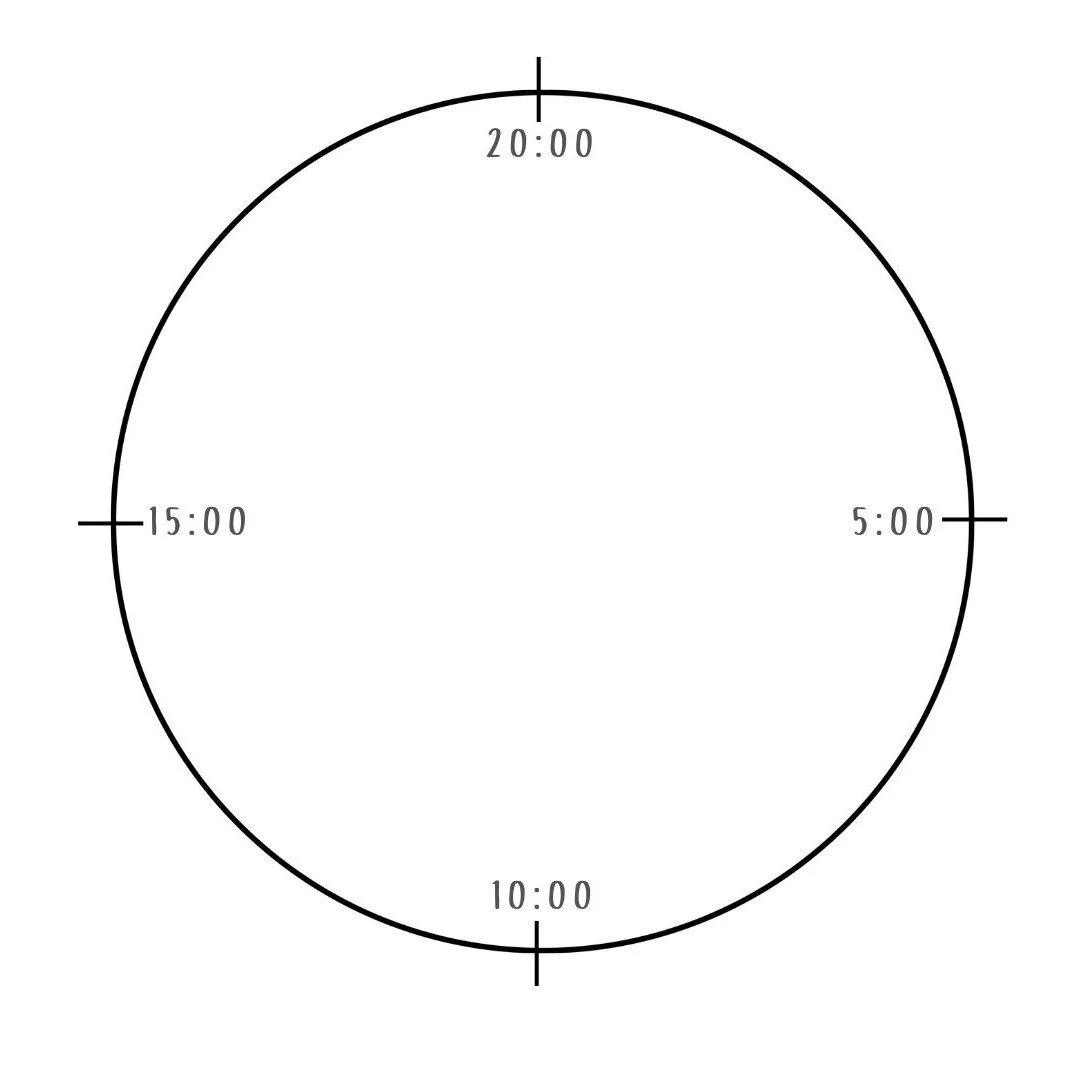
Picture your presentation as a clock.
Mark your halfway and quarter-time spots.
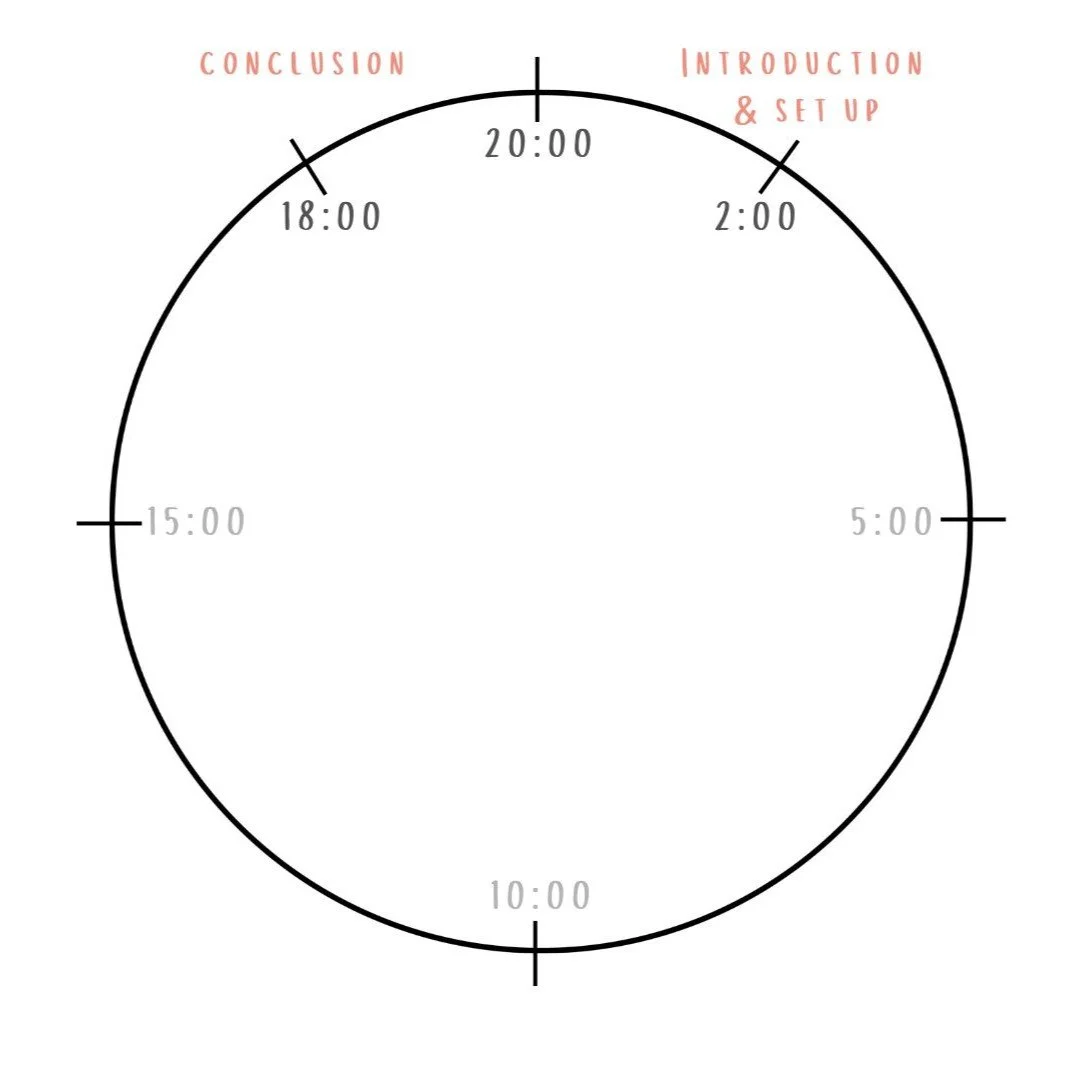
Add your core elements.
Give yourself 2-3 mins only for your introduction and conclusion.
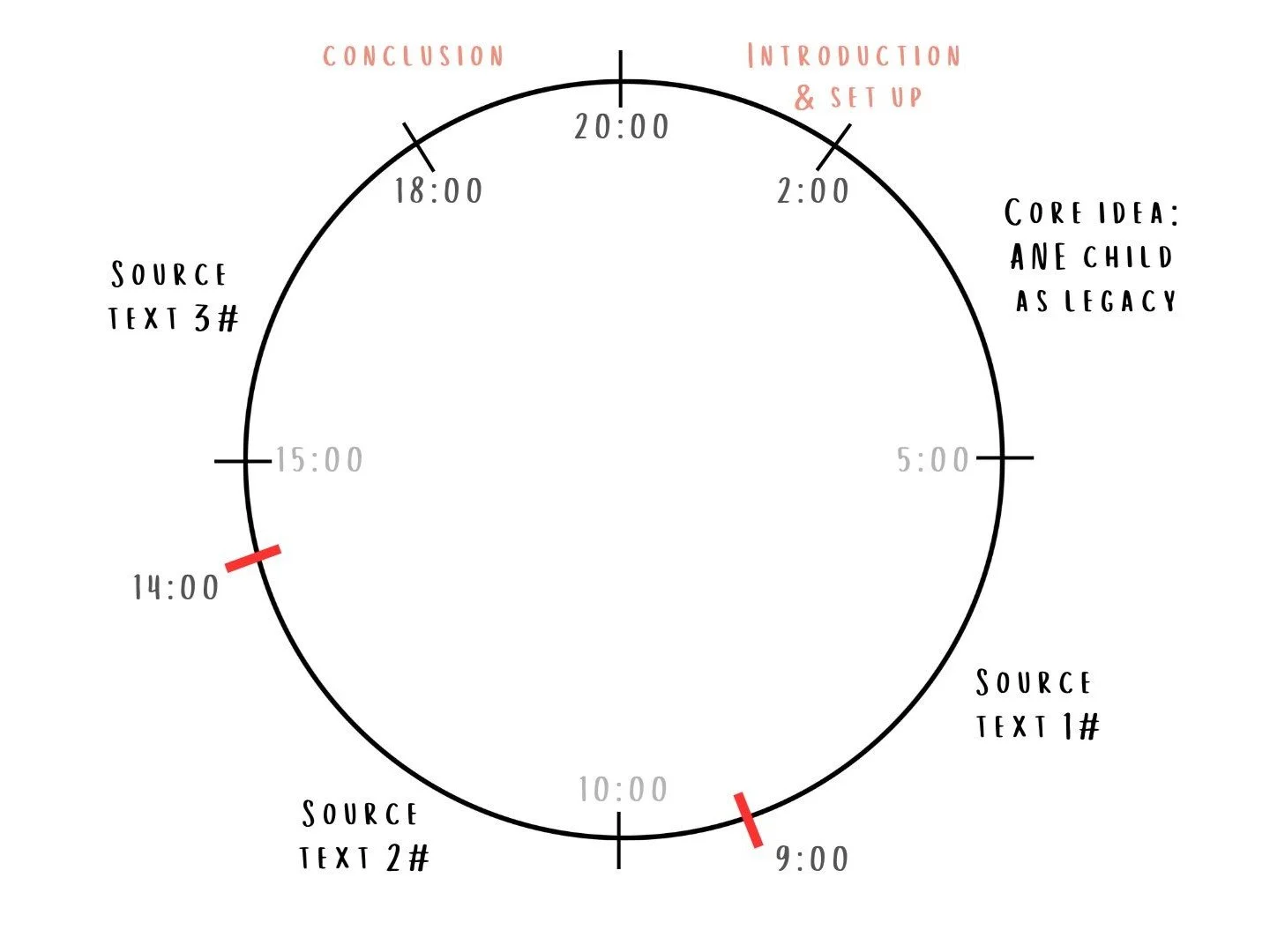
Add your main talking points.
Decide if you want an even distribution of time, or if some topics get more time than others.
The beauty of this model is that if you want to include something, you are instantly reminded that it will take away time from something else. What are you willing to pair back to make the exchange?
Now write that talk.
As you write, keep the Storyclock beside you, and mentally tell yourself, “I have only 30 secs to get this idea across.” It keeps your talk points sharp, and you can even read that small portion out loud in a mini-trial run.
Does it work? It does for me. I wrote the presentation using the Storyclock outline, and on my first run-through (with a couple of slide-transition hiccups and slight word fumbles) came in at an acceptable 22 mins. MUCH BETTER than previous talk timings! With some practice and a few tweaks, I’ll be perfectly on time and ready for the gold of Q&A.
Your turn. All the best for your conference presentation, and I look forward to hearing all about your gold!
Happy presenting! ~Rosey
PS. If you’re curious to see the original Storyclock presentation, here’s Seth Worley’s original pitch in all his creative genius! Maybe it will spark some new ideas for you…
