
Original languages in the classroom
I’m dyslexic. I’m dyslexic and read two ancient languages and (ambitiously) learning a few more. To participate in class discussions, I have had to build scaffolding so that I can keep up with what I’m hearing vs. what I’m reading, but I discovered that my systems facilitate everyone’s ability to see patterns and talk about the text.
Here’s my secret: use colour.
Verbs are the driving force of the languages I use, so to speed up my recognition of what’s happening in the text, I use a colour-coding system for all verbs. (The system can be adapted to any language.) Highlighting my verbs is the first step I take in any kind of translation work.
A friend and I started colour-coding in Koine Greek.
Indicatives are yellow
Imperatives are red
Subjunctives are pink (and any optative ‘wish-based’ mood is in the pink/purple range), sometimes orange if pink isn’t available (as below)
Infinitives are blue
Participles are green
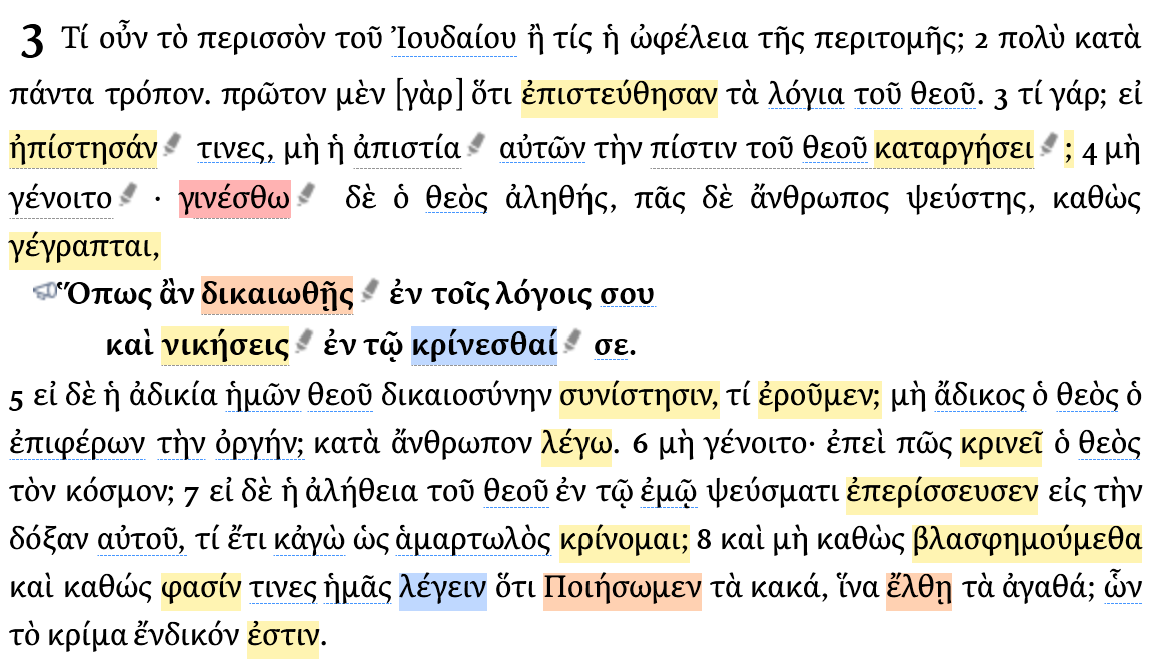
Image of Koine Greek text with verbs following the colour chart. You can program Logos ‘visual filters’ to automatically colour your texts like this. Accordance requires you to do a ‘morphological search’ or ‘amplify to diagram’ function on a specific passage.
With just a few tweaks, we carried the system into Biblical Hebrew.
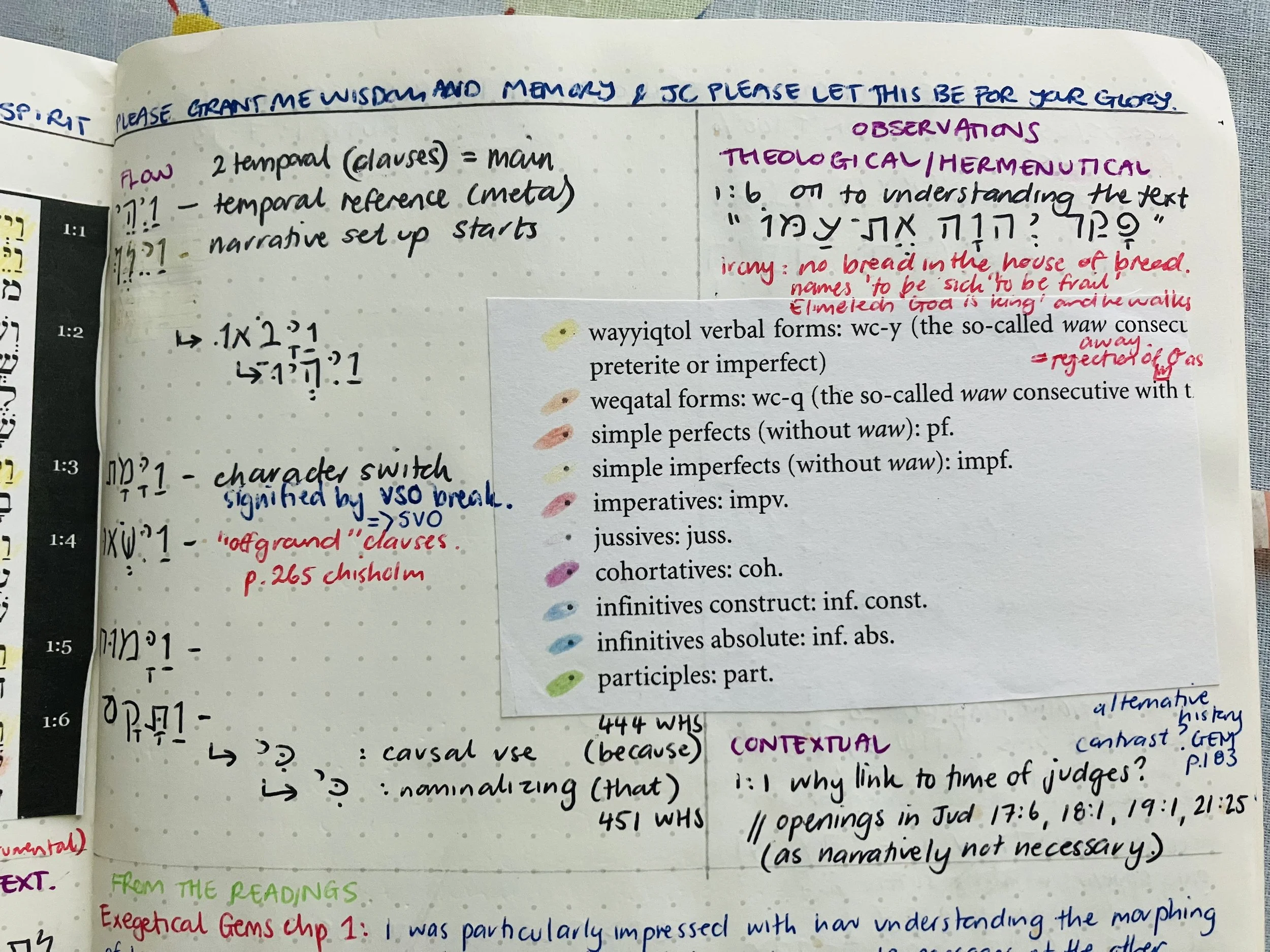
My colour coding system applied to Biblical Hebrew.
Without the markup, a pericope looks like an unassailable block of text to my brain. With the markup, I can see discrete grammatical units and follow the conversation more quickly.
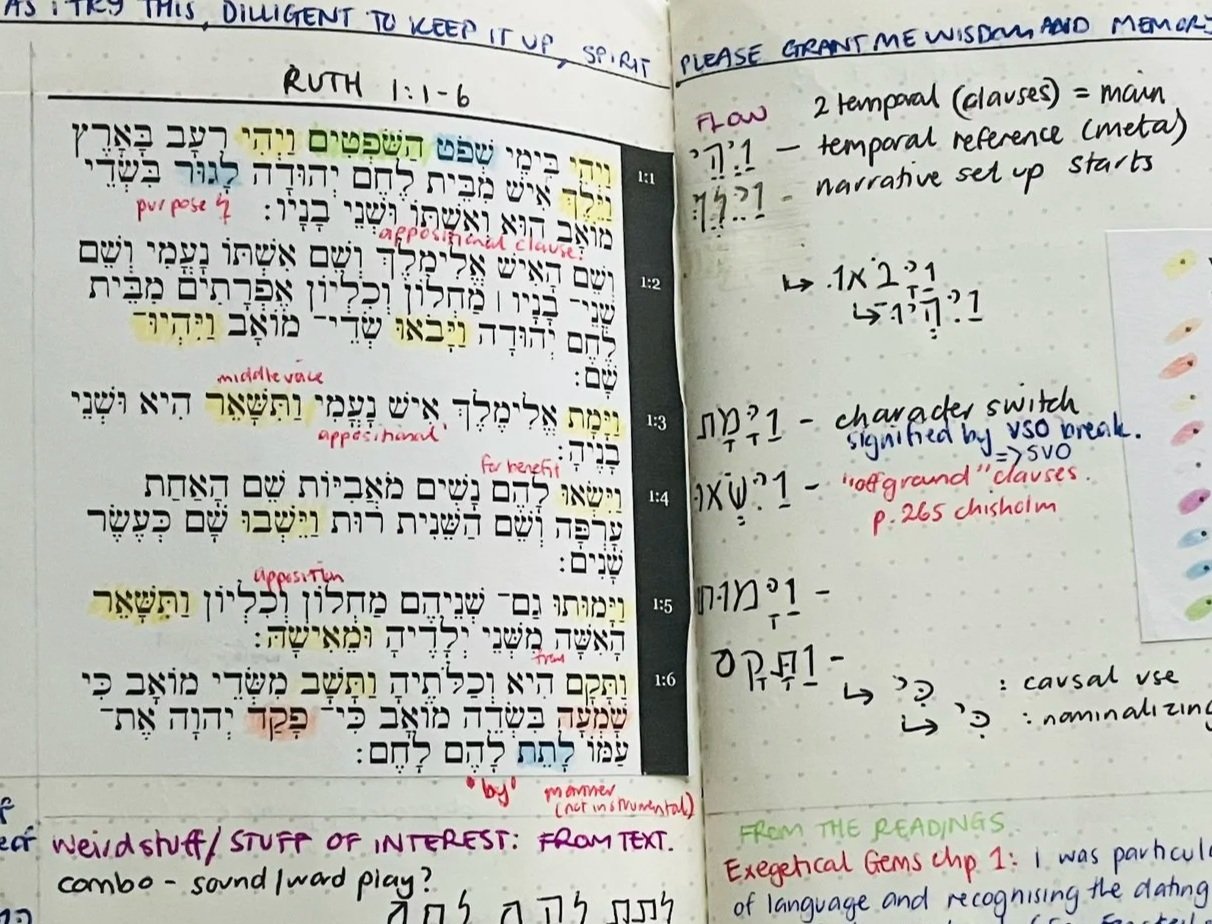
Image of Biblical Hebrew text with verbs marked up in their colours. When discussion happens in class, I can quickly track the clause associated with the verb and keep up. I can also be corrected quickly when someone sees a colour out of place.
If your brain is on the neuro-spicy scale, I highly recommend using colour to help you navigate texts more quickly. You can also get into ‘reading’ texts faster if your software programs allow you to use ‘visual filters’ or something similar.
If you’re neurotypical, you won’t really need it, but it won’t interfere with your experience.
If you’re a teacher and you provide class materials in a similar colour-coded format, you’ll be helping people who might otherwise be left behind participate. Just don’t forget to give them the key!
NB: I’ve been using this system for a decade now, and it’s only ever benefited my neurotypical classmates.
Happy language learning! ~Rosey
PS. If you’re a synesthete and my system is ‘wrong colour’ for your brain, feel free to change it!
