Move seamlessly from reading to writing
You’ve just finished reading all the material you have time for, and now it’s time to write. It can often feel like you’ve been looking in one direction and now have to shift 180 degrees to do a completely different activity! And that’s when you get stuck. The good news is that there are steps you can take while you’re reading to make stepping stones to your writing.

Image: A male student is making notes from his reading on the right. A swirly arrow connects the textbook and notes to his laptop on his left.
I frequently have months between reading a text and writing on the ideas, so my note-taking method has to be robust enough to capture all the relevant information and be useful, so that I can dive right back in and remember it as if it’s a fresh conversation.
You’ve hopefully heard of the Cornell Method for taking notes. (It was invented by Professor Walter Pauk of Cornell University in the 1950s.) It takes your page and divides it into 4 sections, like so…
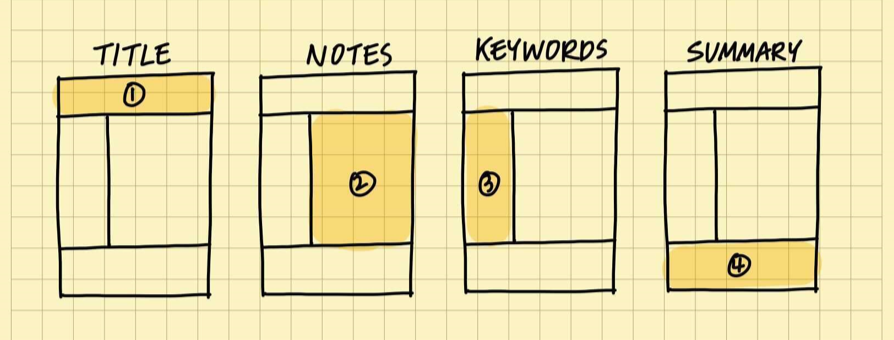
Image: Flexcil.com
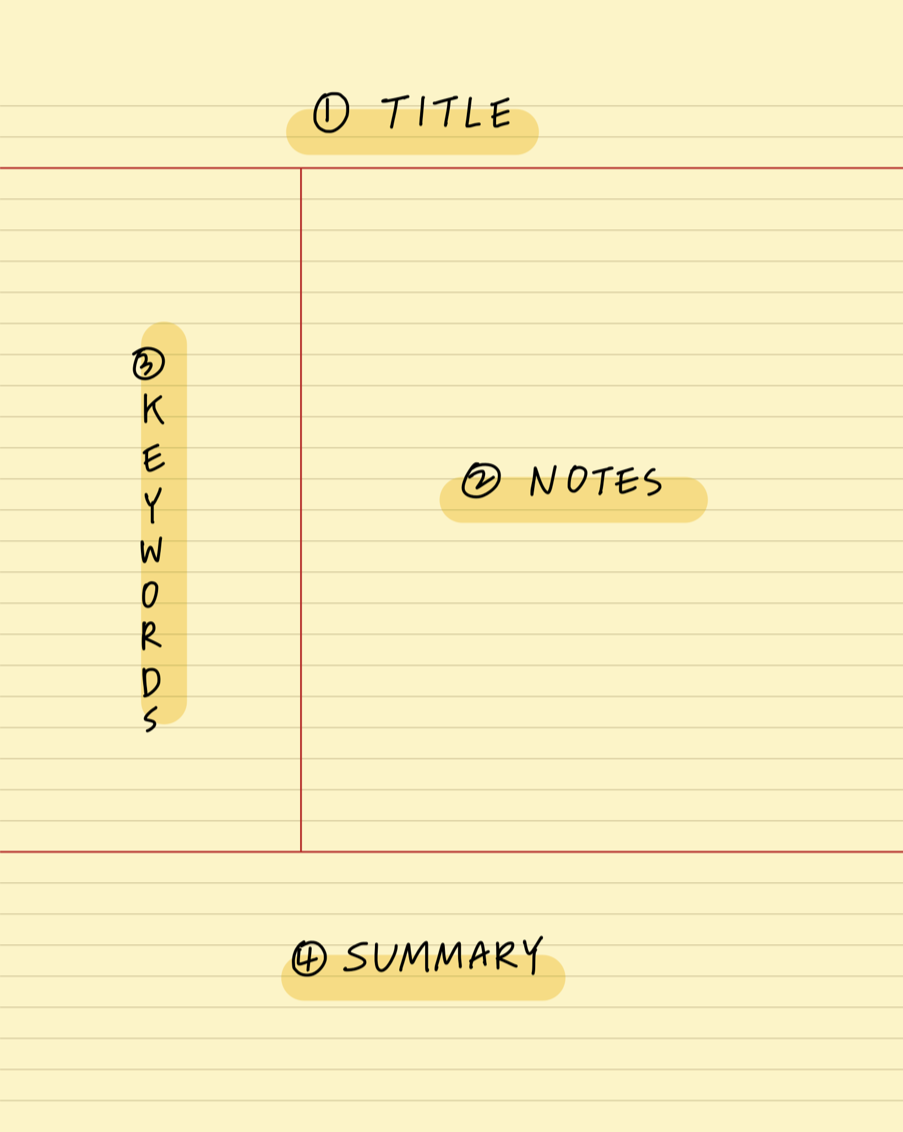
Image: Flexcil.com
The original Cornell method…
The idea is that as you read, you take the big ideas and put them in section 3, and right next to it, you can add notes on examples they use, diagrams, etc., in section 2.
The final section (4) is only after you’ve finished your reading, to come back and sum up the ideas in the notes that you’ve taken. This is usually where people think you get a head start on writing, but summaries don’t really get you writing. In fact, I find that this level of note-taking only captures my initial thinking about an idea. And let’s face it, often the best thinking is the type that percolates. I call that my ‘second-level thinking’.
Here’s how I get to my better thoughts. Start with the Cornell note-taking method, but amp it up.
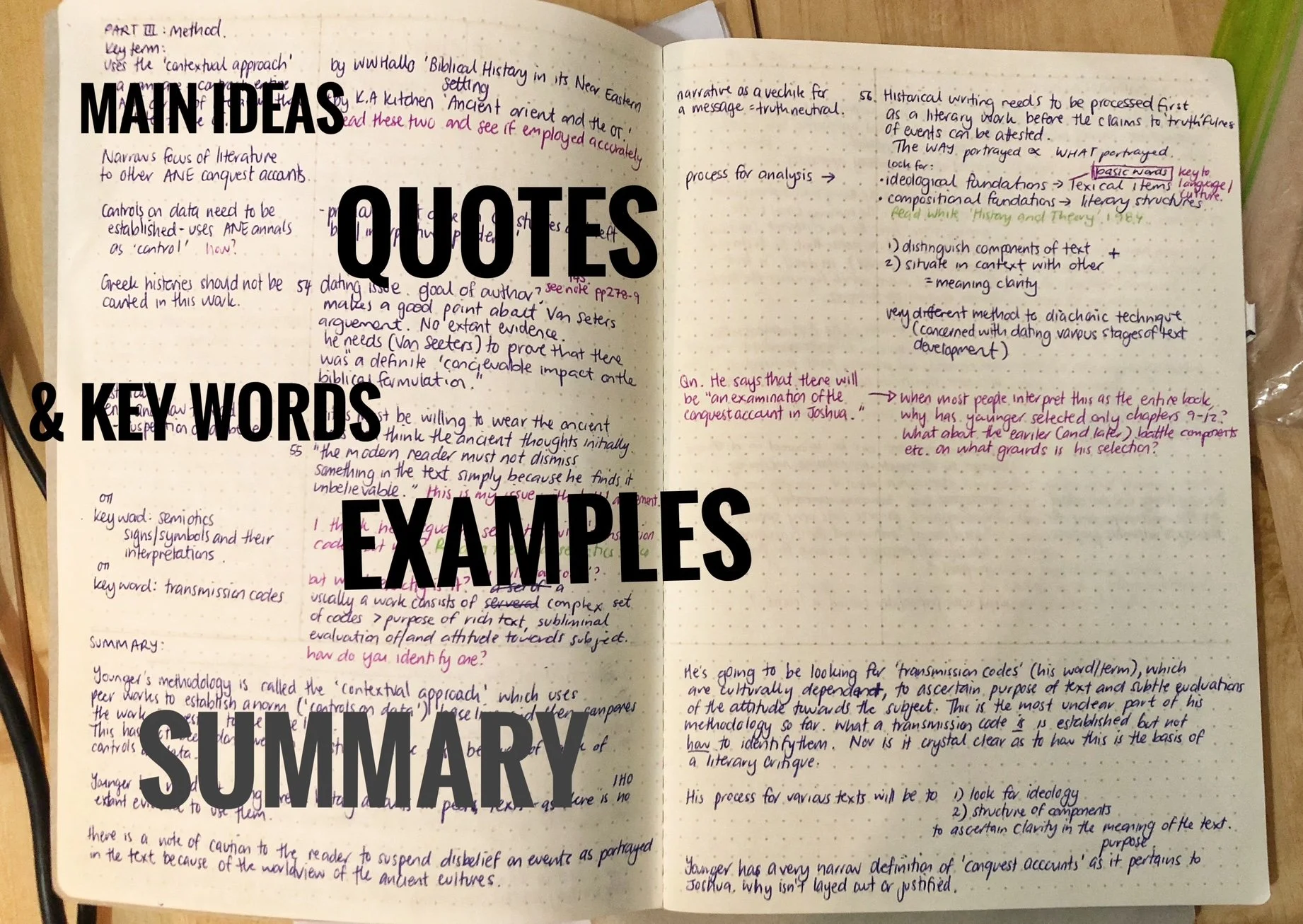
Image: author
The writing special: Cornell method 2.0
What you can start to see is that I use three colours when I take notes. It doesn’t matter (to me) if the colours change, but what the colours represent are different layers of thinking.
Initial notes in blue are the author’s ideas, quotes, and examples. The base of the Cornell method.
Second-layer notes in purple are the running dialogue in my head as I read the text. I constantly ask questions of the text, and these questions are critical to allowing me to return months later and pick up my ‘second-level’ thinking. I don’t have to rehash the conversation; it’s already there, and I can build on a new level with synthesis from other readings when I get to the writing phase.
The final ‘layer’ of notes (green) are the answers to my questions. If I read on and find the answer to a question I asked, I jump back and write the reference/answer in that final colour.
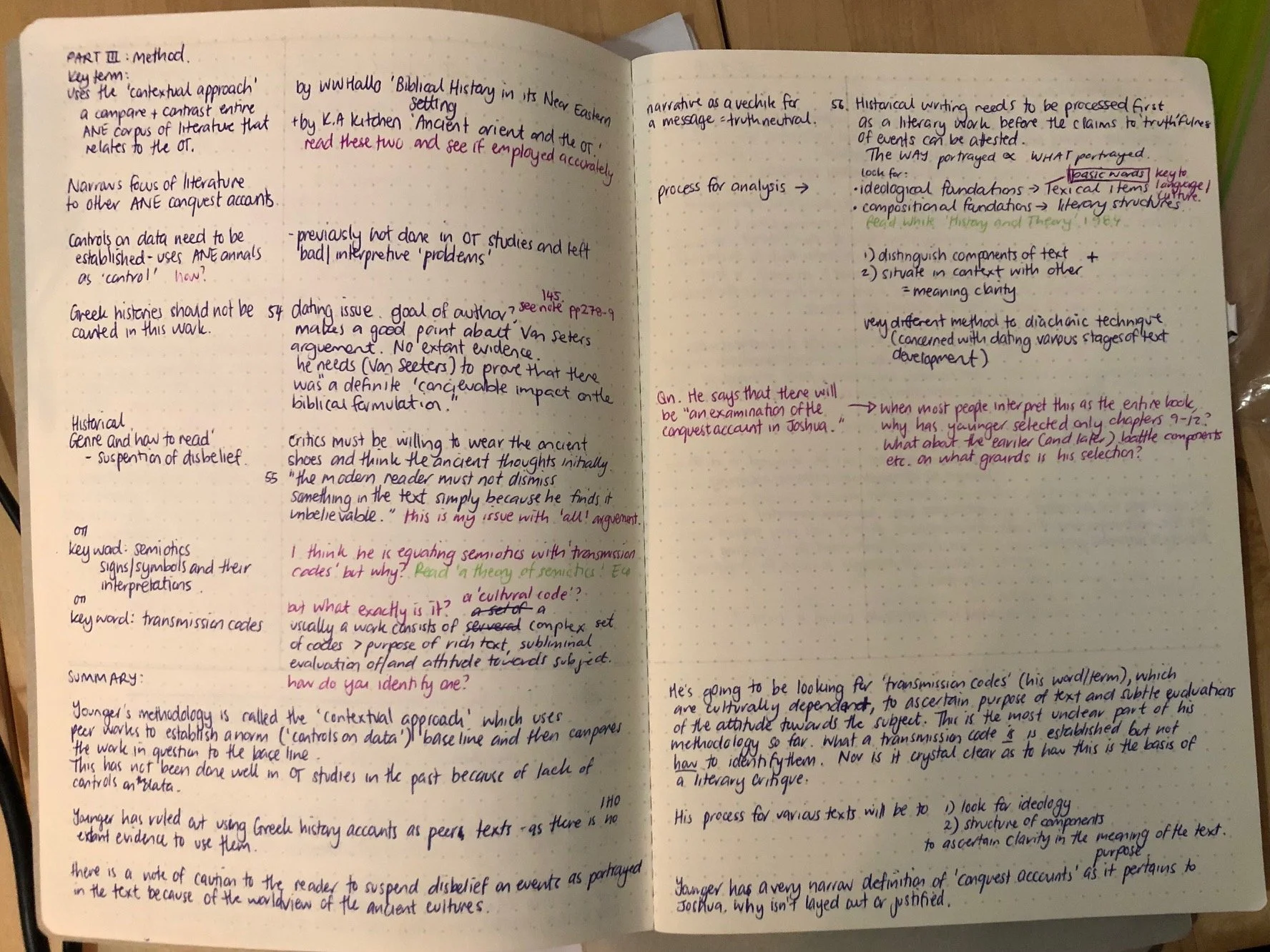
Image: author. Same image as before, but now you can see the three colours and layers of note-taking.
Here’s the magic stepping-stone from reading to writing: your questions of the text (the purple layer of notes) form the basis of your writing!
Eg, beside the keyword “transmission codes”, you can see in purple that I’ve written, “how do you identify one?”
I now start my writing with a question. “How do you identify transmission codes?” I can go on to show how Younger does this, compare this method to another, comment on the gaps or issues in the process, or make suggestions for improvement.
TA-DA!
In reality, you don’t have to use the Cornell method; you just need a way to capture your questions/conversation with the text as you’re going along. And having them beside the content makes it easier to restart that conversation. Whatever works for you!
Go ahead and try it yourself! I’d love to hear how you made it work. Leave a comment or sign up for my newsletter to get these tools straight to your inbox.
Happy researching! ~Rosey
